
A Guide to Switching Between Instruments
going back and forth between violin and viola

Correct Instrument Size
Sound production
Mindset
Those are the three biggest things.
Size of Instrument
Technically speaking, the dimensions of a viola are a compromise. Violas do not come in “standard” sizes like violins: 1/4, 1/2, 3/4, 7/8, 4/4, but come in incremental sizes. Violas are measured in body length and vary greatly in how large or small the upper and lower bouts are. Not familiar with violin and viola sizing? This article explains it really well.
As a violinist, my teachers rarely talked about beauty of sound and resonance. Not because it wasn’t important, but because of the way the violin speaks and projects. The dimensions of a violin make the sound resonate and speak in a way that is “easier” than the viola. We talked a lot about sound quality and spinning sound in violin lessons, but viola teachers approach sound differently. More on that later.
As you are picking out a viola (as a recovering violinist, or someone who just wants to add viola) choose one that works best for your hand shape and size. When I first started viola, I played on a beautiful 16+ inch French viola. It worked for me because it had a very skinny neck and small upper bouts. So, going back and forth from violin to viola wasn’t too difficult because the neck was similar. After a few years of playing on the larger viola though, I started to feel like I needed something smaller with a great sound. I was very fortunate to find a gorgeous 15.25 inch Italian viola with an incredible sound. The sound of my viola isn’t just great for a small instrument, it’s just great in general.
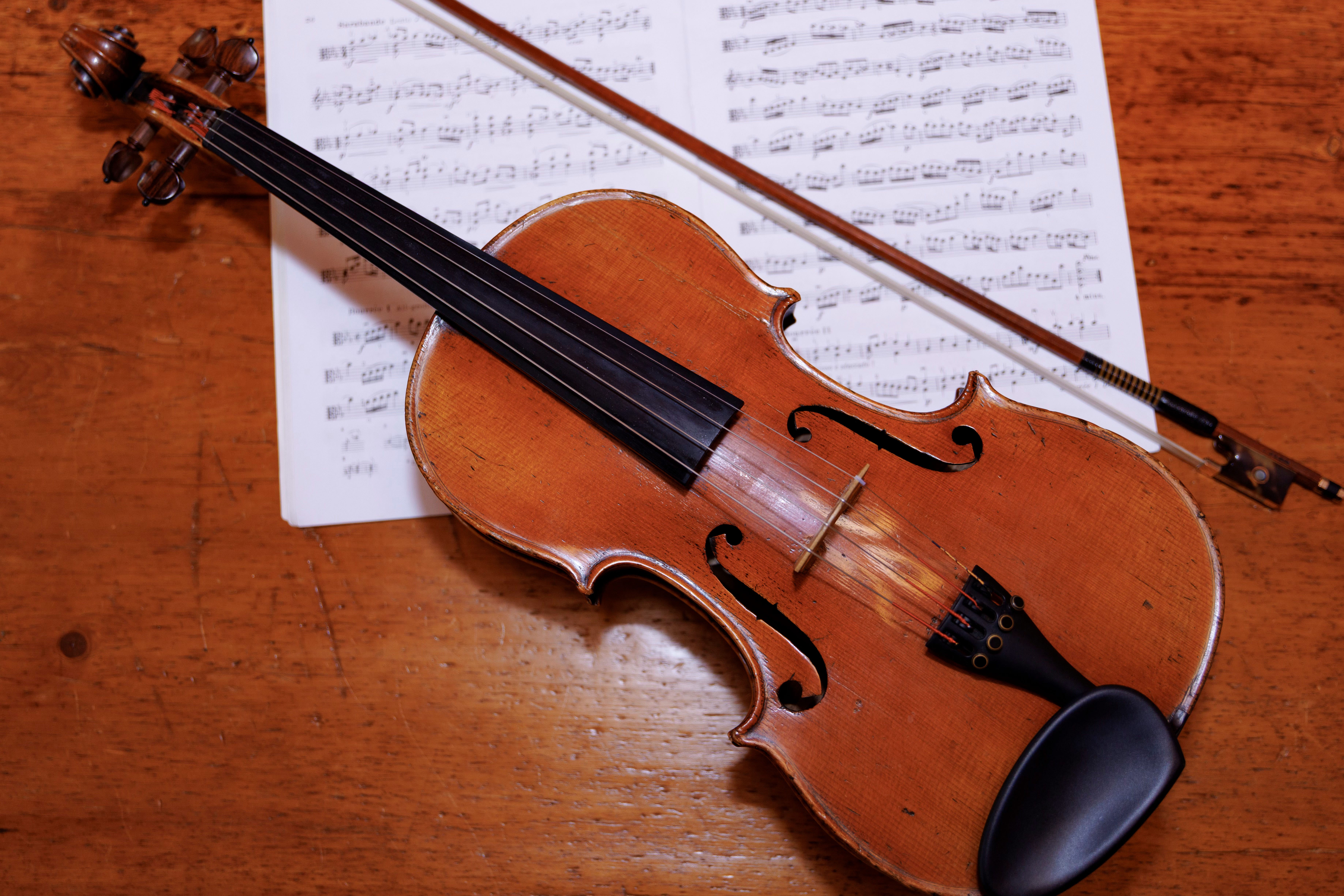
Some violists live by the motto: the bigger the better. I totally get it. Larger violas tend to have deeper sounds and can sound more cello like. If that’s your vibe, go for it, but if you plan on switching between instruments frequently, pick a viola that has a skinnier neck and reasonable upper bouts.
A full size violin is 14 inches in length. For me, I find that going back and forth between a 14 inch instrument and a 15.25 inch instrument means less fiddling around with hand shape and intonation issues that can arise from playing a bigger viola.
Sound Production
When switching back and forth, one of the biggest technical aspects to consider is sound production (bow usage). As mentioned at the top, the violin sound pops more easily. One must draw the sound out of a viola and focus on resonance. Some violists feel like the smoosh violins when they try to play them. Since I play a small viola, I do not find this as much of an issue. I also use a moderately weighted bow on both instruments.
However, for those going back and forth between a large viola and regular sized violin, being mindful of bow pressure and speed is crucial. It might also not be possible for some bows to work on both instruments. It all depends on how large the viola is.
My viola professor used to say to focus on beauty of sound. Best advice ever and this is where mindset comes into play.
Mindset
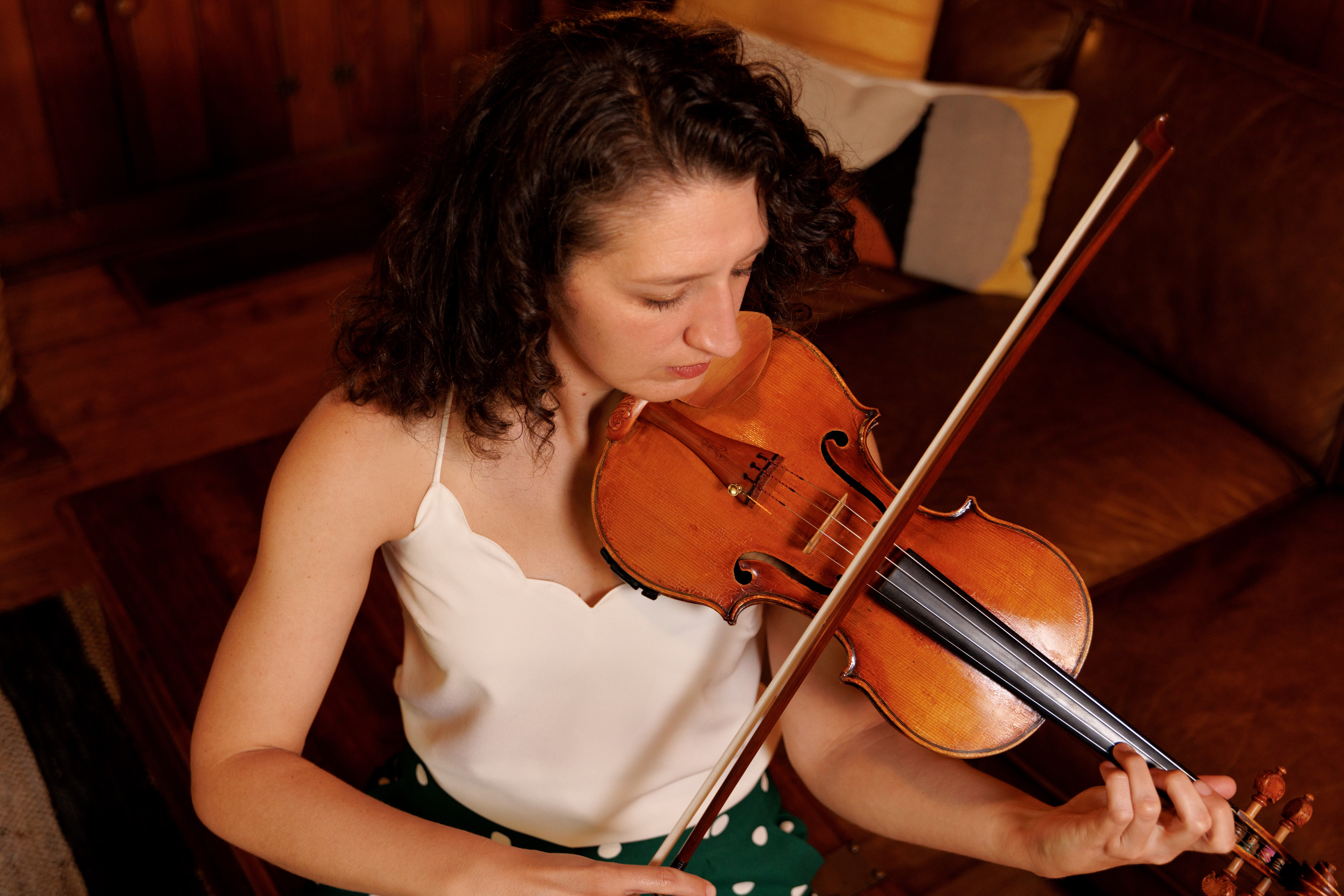
Viola brain vs. violin brain. For me viola feel so much more chilled out than violin. I enjoy the deeper sounds, the slower bow, the focus on drawing the sound out. This mindset has helped my violin playing tremendously. I’m a much calmer violinist because I play viola. I think it’s the focus on lower tones and the inner voice in chamber music and orchestral playing. When I’m switching back and forth regularly, I find myself with the personality of a violist playing violin. This can get a little amusing when playing in string quartets because I channel my 1st violin brain and viola brain at the same time.
Really what I mean by mindset is- switching back and forth between the two instruments is like sometimes driving a compact car and sometimes driving a pickup truck. While it may take a moment to get used to the angles and where everything is, the driving is the same. When driving the truck you need to take curves in the road differently than in the compact car. Going from violin to viola and back again is the same. There are just slight differences in left hand finger spacing and how the bow is drawn across the string to produce a beautiful tone.
Now sometimes I forget I’m playing violin and I use my viola bow arm weight and it’s like a wall of sound. While this can be good in some cases, it isn’t always a good thing. Bow arm weight it is just something to be mindful of so you don’t drown out your quartet members with viola arm sound on violin.
The Main Message
Essentially, pick the right size instrument for you, focus on beauty of sound, and remember which instrument you’re playing and how you have to make tiny adjustments.